
Indian policymakers must incorporate in their nuclear doctrine a realistic response to tactical nuclear warheads, says Ajai Shukla.

'If you behave like a nail, the adversary will behave like a hammer.'

The unfortunate thing is that the film will leave a poor impression of the IAF's and indeed of the armed forces's ability to handle sensitive social matters within their professional space, observes Lieutenant General Syed Ata Hasnain (retd).

'There is a sense of realism in the Pakistan army that if they needled India during the Ladakh standoff, they would have seen a strong retaliation.' 'Pakistan was hoping that India would come out looking weaker in the region and get embarrassed, but that obviously has not happened.'
'The one aspect which no Indian military thinker would wish to see emerge is a LoC type of posture at the LAC.' 'The LoC is manned for 750 km and terrorist infiltration has led to the creation of a virtual fortress along its entire length.' 'Something mirroring this at the LAC is going to be expensive although deployment everywhere is not warranted there.' 'However, given the complete trust deficit, there appear few alternatives,' notes Lieutenant General Syed Ata Hasnain (retd).

The Chinese have just one commander for all the forces confronting India. Commanders of all these forces answer to one man, and one headquarter. India, on the other hand, offers a diversity of options that is a military embarrassment in the 21st century. In Arunachal and Sikkim-Bhutan, the Eastern Army Commander is in charge. In the Uttarakhand (central) sector, it will be the Central Army Commander. The Himachal-Tibet border is the domain of the Western Army Commander. And all of Kashmir and Ladakh further on, the Northern Army's. Effectively, an array of at least eight 'three-star' commanders will be arrayed against one Chinese, says Shekhar Gupta.
Indian military sources said no firearms were used in the clashes and that most of the injuries were sustained following stone-pelting and use of rods by the Chinese side.

"Our worry is that a small mistake, an accidental exchange of fire at night, might lead to an unintended escalation," a senior officer confessed
'China would want to take a tougher stance against India forming those strategic partnerships and prevent Quad from becoming a military alliance.'

'We would have faced many more Galwans had Indian troops not reacted and retaliated the way they did.'

Two months ago, May 2, Major Anuj Sood made the supreme sacrifice for the motherland in a hostage-rescue mission in J&K. As his grieving family grapples with their immense loss, they graciously share memories of the young major -- a husband, brother and son -- whose only calling was the fauj.

Did Vinod Sehgal die in Tsangdgar or was he taken PoW to Tibet or China? Why has the IAF kept so quiet for all these years, asks Claude Arpi.
'India cannot allow Beijing's policy of stabilising and destabilising the border at will to perpetuate its own ends.' A riveting excerpt from Manish Tiwari's 10 Flashpoints; 20 Years National Security Situations That Impacted India.
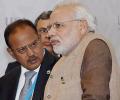
The US has all along interfered in India-China issues. The objective is clear: Bring the Sino-Indian standoff to a flashpoint that would compel Modi government to take shelter under an American umbrella, argues Ambassador M K Bhadrakumar.

A war hero looks back at the men and the moments that forged India's greatest military victory.

Major Bikramjeet Kanwarpal succumbed to COVID-19 on May 1. After retiring from the Indian Army, the major became a successful actor in films and television. An old friend salutes a wonderful human being.
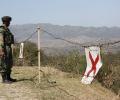
What happens when a Delhi professor is given the rare opportunity to travel with the Pakistan army along the LoC? Find out in this fascinating excerpt from Happymon Jacob's book, The Line of Control: Travelling With The Indian And Pakistani Armies.

'The thin line is a permanent dilemma with soldiers. You have to appreciate that in that dilemma and chaos there are officers who stand and lead their men.

The year 2014 is coming to an end. It was the year of conflict, the year of strife. Year 2014 will be remembered for several reasons -- the rise and threat of the Islamic State, the downing of two Malayasia Airlines aircraft and the sudden and effective way of using hastags on social media to generate a buzz about the event. After all, who can forget #theicebucket challenge and the phenomenon it grew into. Read on as we bring you an overview of international news and events of 2014.
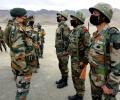
'India is not the India of 1962. We are not carrying that baggage of history anymore.'

'Why has the rhetoric gone down on the Indian side, Durrani wondered aloud.' 'I said because almost total normalcy and peace had returned on the ground in Kashmir,' recalls Shekhar Gupta. 'The general gave me that career spook's laser look. And he said: "That situation on the ground can change in no time".' 'This was precisely when the Pakistanis began their first incursions into Kargil.' 'Durrani had been retired for five years.' 'But once the ISI boss, you are always in the know.'

'Had they struck on the night of the 1st, there would have been hell to pay and had they been able to sneak further in, we would have had a greater problem,' says Lieutenant General H S Panag (retd), the former Northern Army Commander.

We would like that people come directly to us rather than resorting to the social media or other means, Gen Rawat said.

'He was believed to finish his own work in an hour and spend the remainder of the time walking from one office to another, sitting down with the harried junior staff and helping them sort out the problems they were working on.'
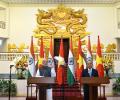
New Delhi is quietly reclaiming its space in Asia by forging alliances with China's neighbours. In a way, India is converting its much-talked about Act East Policy to Engage East practice.

'We must acknowledge China will use Pakistan against India.' 'We all need to know that these two countries are ready to destabilise India at all times.'

'Our defence services are in a position to checkmate any Chinese adventurism.'

'It will be a repeated folly to ever think that China will not attack us.'

According to sources, Russian energy giant Rosneft or its affiliates, Saudi Aramco and Reliance Industries are in race for BPCL's three refineries - Mumbai, Kochi in Kerala and Bina in Madhya Pradesh - 16,309 petrol pumps, 6,113 LPG distributor agencies and more than a fifth of 256 aviation fuel stations in the country.

Is Nasir Khan Janjua's appointment as Pakistan's national security advisor the first step in suborning the elected civilian government?
So far, the Central Sector has never seen active hostilities, remaining peaceful even through the 1962 war. A reason for the Central Sector having remained peaceful is the towering Himalayan watershed that defines the border.

'Overlying his idealism was a hatred of war and of all things military. He gave no deep thought to politico-military matters and this prevented him from making sound security decisions.'
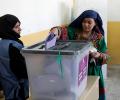
The election seem to have been conducted without any major security lapses. However, in the coming weeks, the military situation in Kandahar could tilt in the Taliban's favour, notes Aveek Sen.

It said the prime minister of Pakistan has neither chosen to condemn the heinous act nor condoled with the bereaved families.
'As long as Pakistan exists, the situation will not stabilise and violence is bound to erupt from time to time.' 'Though not a final solution, a step that could help localise the abscess -- trifurcate Jammu and Kashmir state into three parts: Jammu, Ladakh and the Valley.'

'Inept handling by the National Security Advisor transformed what should have been a short counter-terrorist operation in Pathankot into an apparent debacle.'

The majestic Rajpath saw a scintillating display of India's military might as the country celebrated its 69th Republic Day on Friday, with the leaders of all the 10 countries of the ASEAN attending the parade. Take a look here.

'The public has unfair expectations from Mrs Swaraj who is in Islamabad primarily for the Heart of Asia Conference. To restore India's position among stakeholders on Afghanistan is a fair one but to expect her to do more on the Indo-Pak front without requisite preparatory work is unrealistic.'

What India has failed to acknowledge is that sub-conventional war is the name of the game and irregular forces have emerged with greater strategic value over conventional and even nuclear forces, and reliance purely on conventional force and diplomacy is grossly inadequate, says Lt Gen Prakash Katoch (retired).

Outgoing Army Chief Gen Bikram Singh on Thursday said that India had given a befitting reply to Pakistan after the beheading of an Indian soldier by Pakistani troops in 2013 along the Line of Control even as he did not rule out the possibility of skirmishes on the western front in future.
